

Introduction
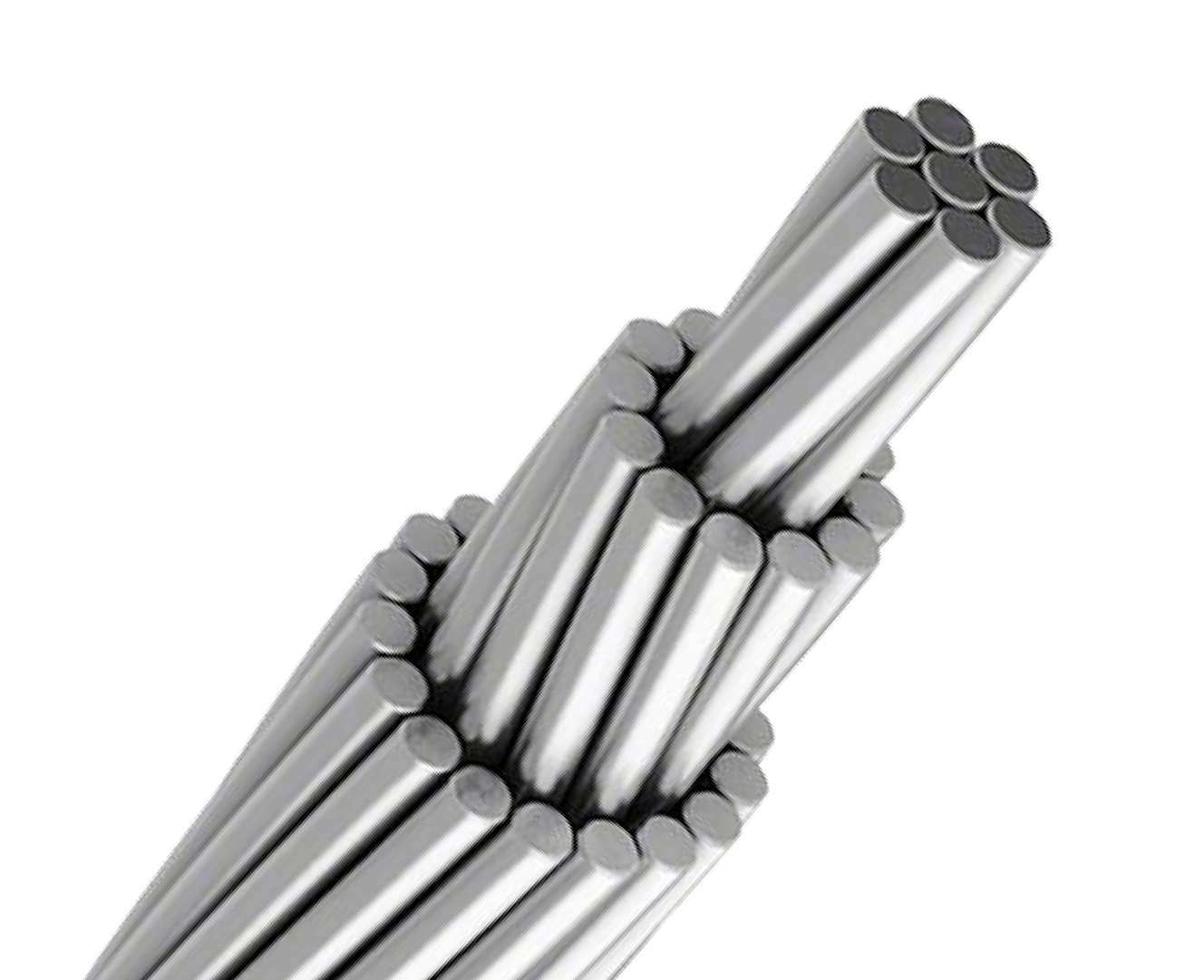
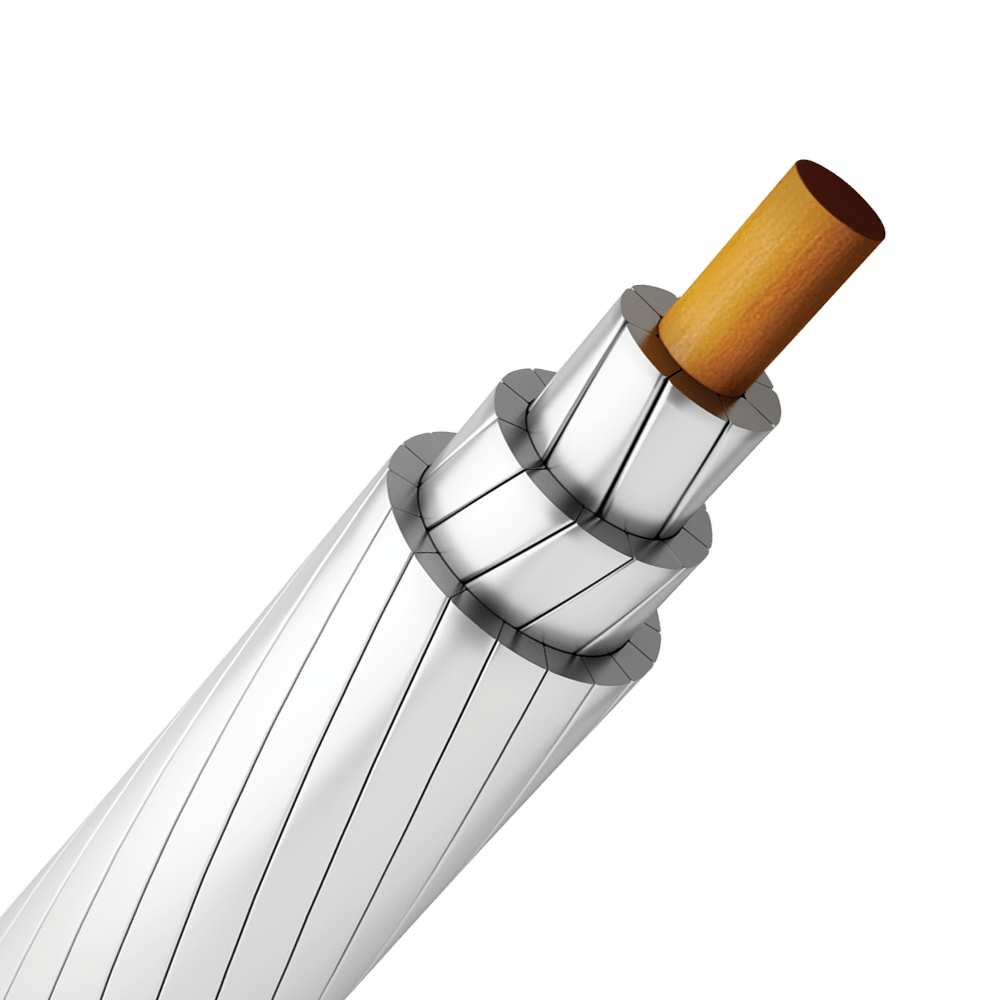
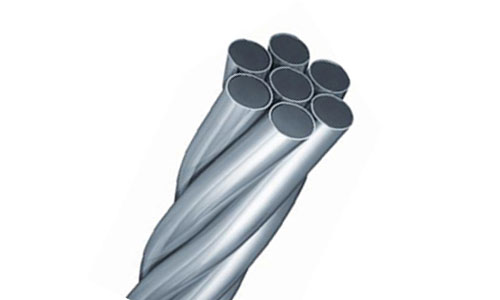
Aluminum Conductor Steel-Reinforced (ACSR/AW) conductors are a composite of 1350-H19 aluminum wires helically stranded in one or more layers around a central Aluminum-Clad Steel (AW) core with a round cross-section. The aluminum-clad steel core can consist of one or more strands (7, 19, and 37 strands). ACSR conductors are manufactured in accordance with the requirements of ASTM standards B549, ASTM B502, and ASTM B230.
Numerous combinations of the number of aluminum and steel layers and wires can be designed.
The sizes and number of layers for common conductors used in overhead lines are provided in technical specification tables.
Features and Benefits
The steel core, which includes a thin layer of aluminum cladding (approximately 10% of the nominal wire radius) around the steel wire, creates ACSR/AW conductors that combine the light weight and good electrical conductivity of aluminum with the high tensile strength of steel.
ACSR/AW conductors are primarily designed in configurations such as 6/1, 7/1, 12/7, 36/1, 24/7, 26/7, 30/7, 30/19, 54/7, and 54/19.
Applications
Aluminum Conductor Steel-Reinforced with Aluminum Cladding (ACSR/AW) conductors are used in distribution and transmission lines and in areas where corrosion resistance and high temperatures are required. These conductors are often used in areas with air pollution and along coastlines or industrial areas.
The use of aluminum cladding on high-strength steel wires provides excellent corrosion resistance, good electrical conductivity, and suitable compatibility with aluminum wires, making Al-Clad steel wires highly suitable materials for the construction of ACSR conductors. Using these wires instead of conventional steel wires increases service life, improves electrical properties, and enhances the corrosion resistance of various conductors. When used in the manufacture of ACSR conductors, these wires increase corrosion resistance, reduce conductor weight, and decrease energy and power losses compared to cables made with galvanized or aluminized steel cores. These advantages have led many transmission and distribution networks worldwide to adopt these types of cables.
Various tests conducted on Al-Clad steel wires have shown that their corrosion resistance is approximately equivalent to that of 1350 aluminum wires, and this holds true in almost all corrosive atmospheres.
In addition to general atmospheric corrosion described above, the use of ACSR/AW conductors compared to conventional ACSR conductors also reduces galvanic corrosion. This is because when steel wires are clad with aluminum, any contact between dissimilar metals is prevented, thus eliminating the formation of electrochemical corrosion cells.
The main advantage of AW coatings over aluminizing (AZ) coatings is the achievement of higher purity in the coating formed on the steel surface, as well as the significantly greater thickness of these coatings, resulting in improved corrosion resistance.
When using ACSR/AW conductors, there is no need for greasing the reinforcing steel core. This reduces weight, simplifies manufacturing, and minimizes the presence of undesirable impurities between the aluminum layers.
Depending on the stranding method and the final dimensions of the assembly, the weight of ACSR/AW conductors is approximately 3-6% less than that of equivalent ACSR conductors, which reduces the installation costs of the corresponding lines. Furthermore, in many cases, the strength-to-weight ratio of ACSR/AW conductors is higher than that of conductors with galvanized or aluminized steel cores. Additionally, due to corrosion in corrosive atmospheric environments, the strength reduction of ACSR/AW conductors over time is significantly less than that of ACSR. The lower electrical resistance of ACSR/AW cables reduces their ohmic losses, and due to the smaller amount of steel used in the reinforcing cores, their magnetic losses are also reduced. With increasing line current (during peak network load times), the difference in electrical resistance between these two conductors becomes much more significant, which is particularly important during peak load periods. Moreover, with the reduction in electrical resistance in ACSR/AW conductors, voltage drop is lower, and the need for voltage control equipment is also reduced.
Although most comparisons are made between ACSR/AW and conventional ACSR conductors, this type of conductor also has advantages over all-aluminum (AAC, AAAC) and ACAR conductors, among which their greater strength (especially high-temperature strength) can be mentioned.